By Isaac Tang
During my trip to Huangshan, I decided that I would stay in a hotel next to Huangshan North Train Station to make things more convenient when I arrive, and leave, Huangshan. Before travelling to Huangshan, I did a lot of research about what to do in the vicinity of Huangshan North Train Station, which is located in Huizhou district of Anhui. Now this place is very far from the usual tourist sites such as the UNESCO-heritage Hongcun and Xidi villages, as well as the Mukeng Bamboo Forest Scenic Area, all of which would require an hour of driving to reach. That is not necessarily a bad thing, as I was hoping to visit sites that were off the beaten path and that would be less crowded.
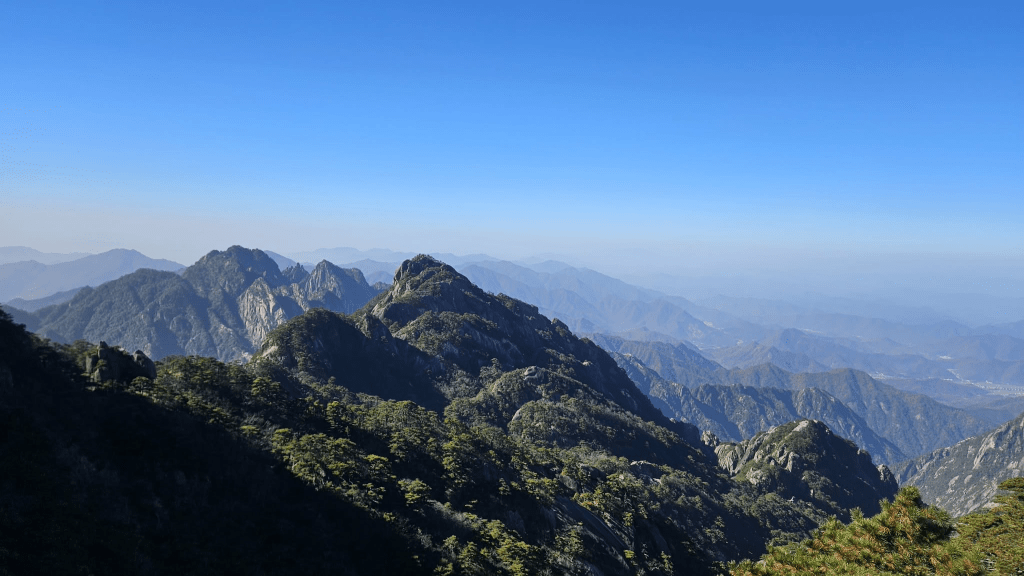
However, there was not as much information on the Huizhou region, and I scoured Google, the Baidu map, Trip.com, and also WeChat to find places of interest. Ultimately, I selected three places—Chengkan village, Qiankou Residence Museum and Xixinan Village.
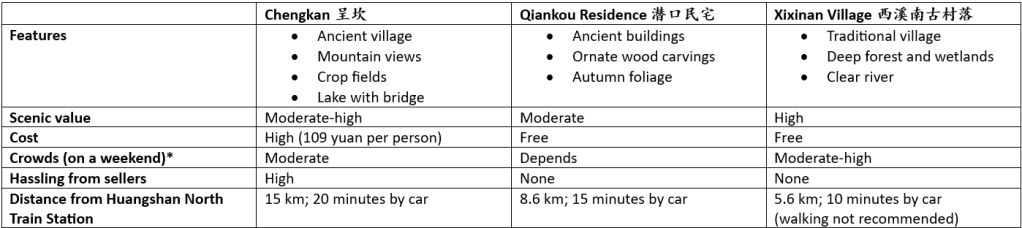
I hope that this article will assist those who are planning to explore Huizhou on their own. A rough summary, based on my personal opinion and biases, are laid out below in a table. Please note that I visited these sites on a weekend in late autumn (end of November).

Chengkan Village
Chengkan Village is widely praised for being one of the most beautiful Huizhou ancient villages, a reputation that can be traced back even to Su Dongpo in the Song Dynasty. Its fame lies in its design that follows feng-shui principles, supposedly imitating the yin-yang symbol. Looking at the map though, it is a challenge to see the resemblance unless one uses his imagination as well. I hoped Chengkan would be less crowded than other ancient villages, given its location and high ticket cost. While my research did indicate that the ticket cost would be 109 yuan per person, we were charged only 53 yuan per person, to my pleasant surprise. I am not sure if this was because we were foreigners or if there was a discount at the time.
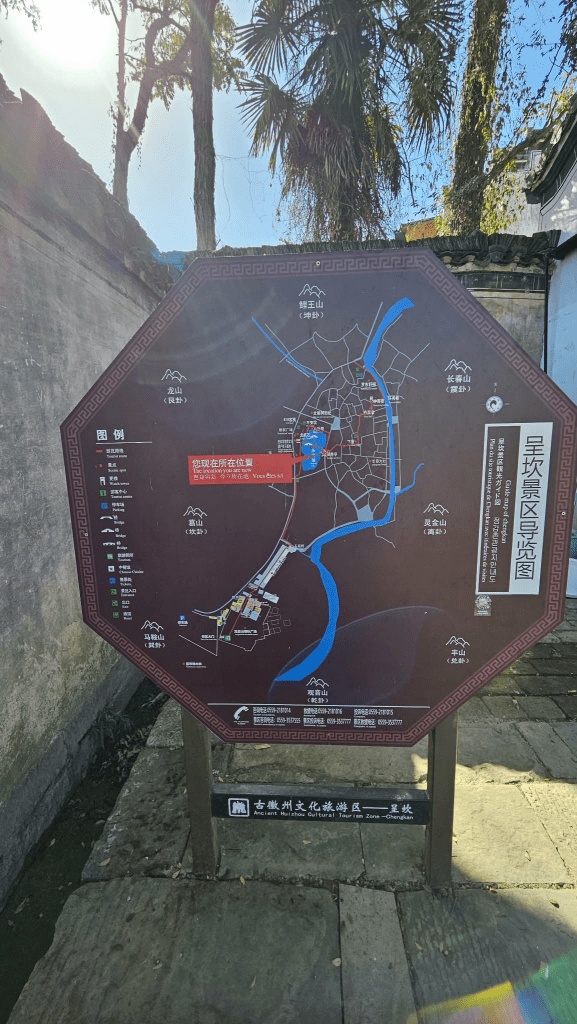
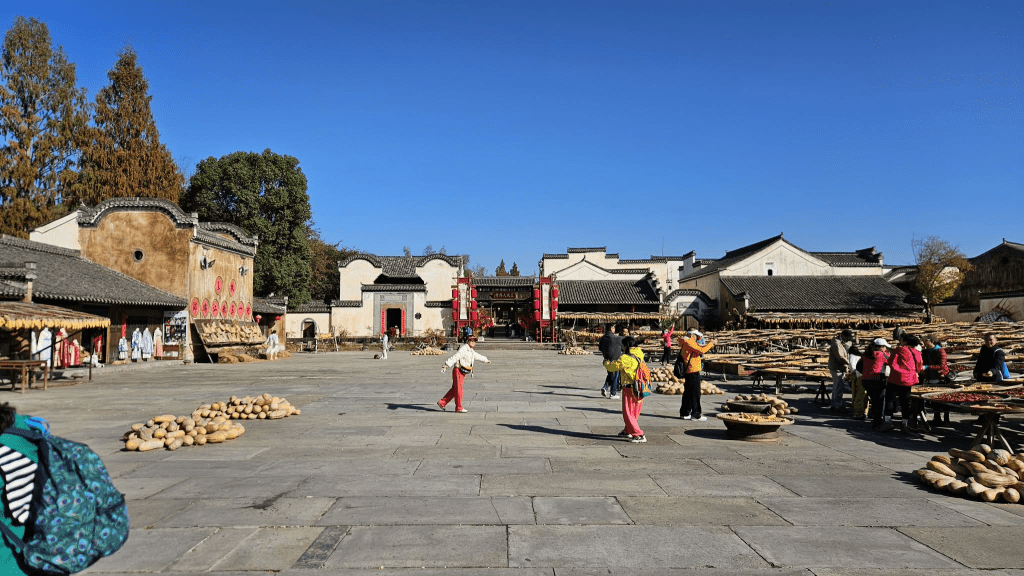
As per the map, there is a well-defined tourist route. At the entrance (the south gate), there is a large paved square. Because it was late November, there were many crops being laid out to dry in preparation for winter. This was a very popular spot for photography. Passing this, there are some traditional Huizhou buildings which house a museum of a sort, explaining trigrams, the Book of Changes, and the significance of the village layout. Unfortunately, most of it is in Chinese.
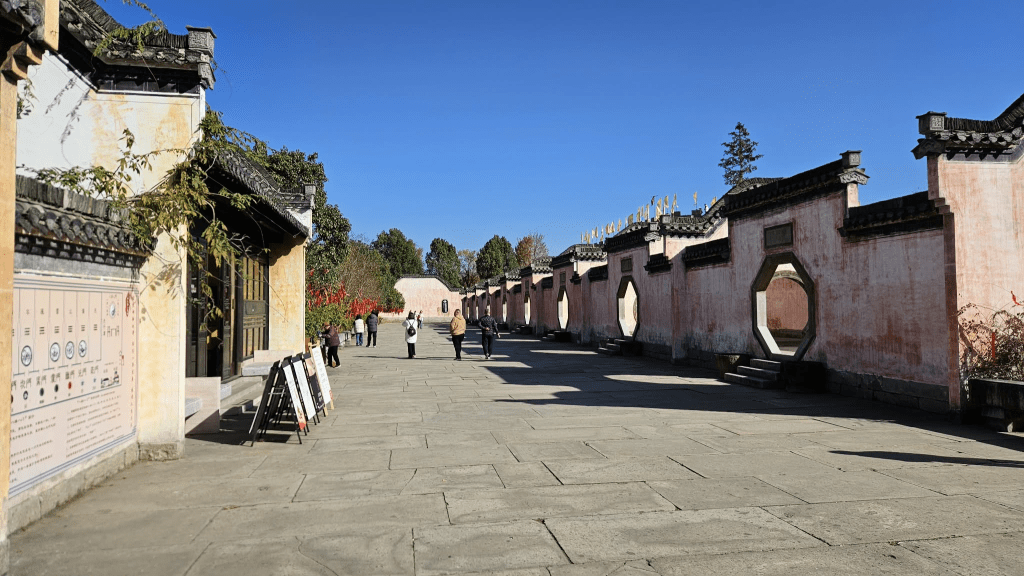
After this, the visitor sees probably the most intriguing thing of the village. There is a pink, roofless corridor with numerous circular moon gateways in a perfect straight line, each gateway leading into a small courtyard. Each courtyard also had an octagonal door on one side. While it is indeed extremely aesthetic, I am still unsure about the purpose and symbolism of this corridor. It is also sadly impossible to take a nice photo of the concentric circles without an intervening crowd of people.

Chengkan Village is surrounded by elegant blue-turquoise mountains and, probably in an effort to better appreciate this, there is a large fort nearby which one can climb and take in panoramic views of the village and the mountains which cradle it. The fort is however a modern creation with clean, newly-cut white stone. In fact, there were builders still working on it. While the viewing platform at the top was very nice, seeing this reconstruction or perhaps reimagination of the village did sow some doubts about the authenticity of other structures in the village.
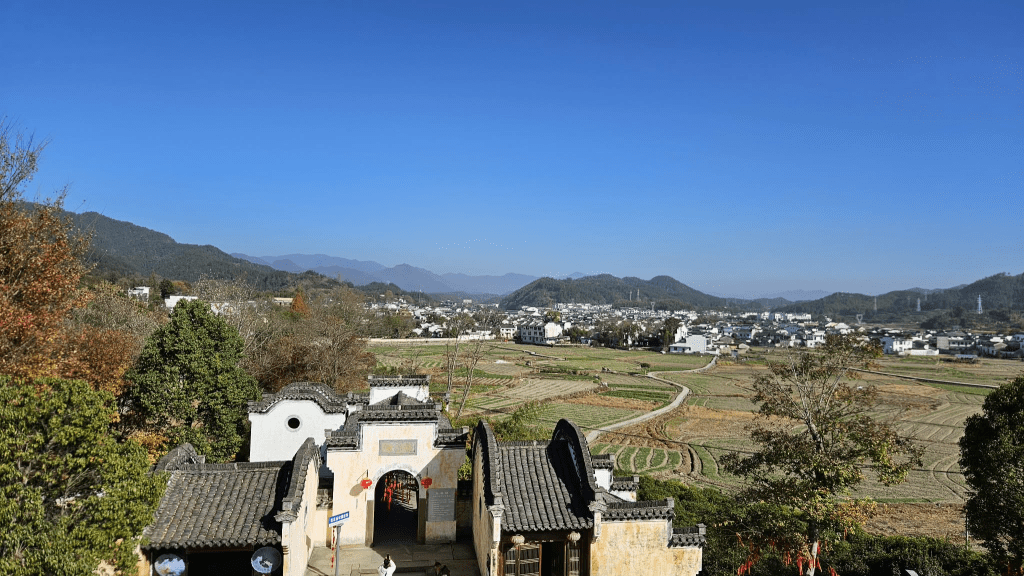
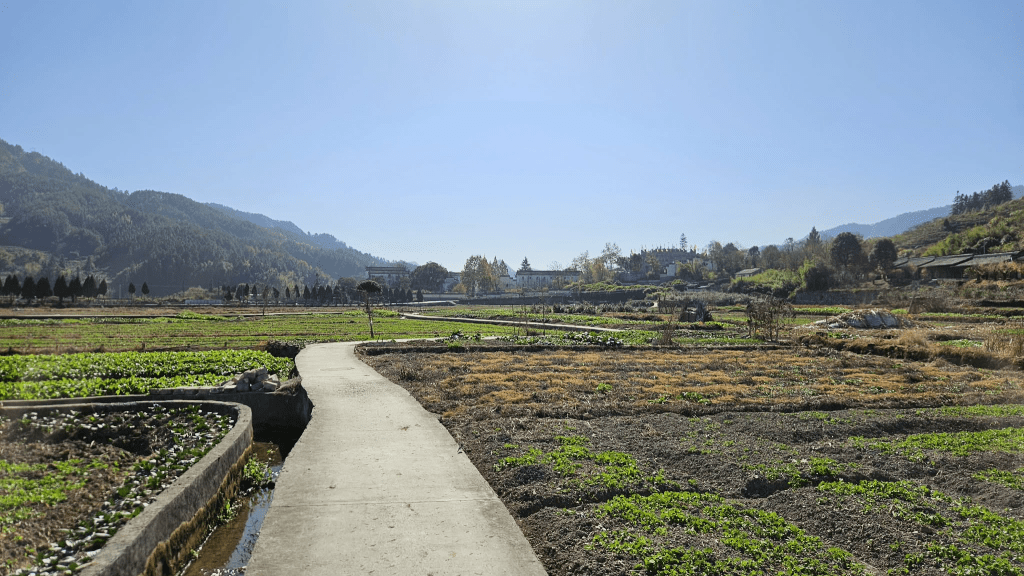
Lying at the foot of the fort is a sprawling vegetable field with winding walkways, irrigated with crystal clear water. Visitors are allowed to roam through the vegetable field and I found it probably the most enjoyable part of my visit. It was refreshing and quiet as few other visitors ventured here.
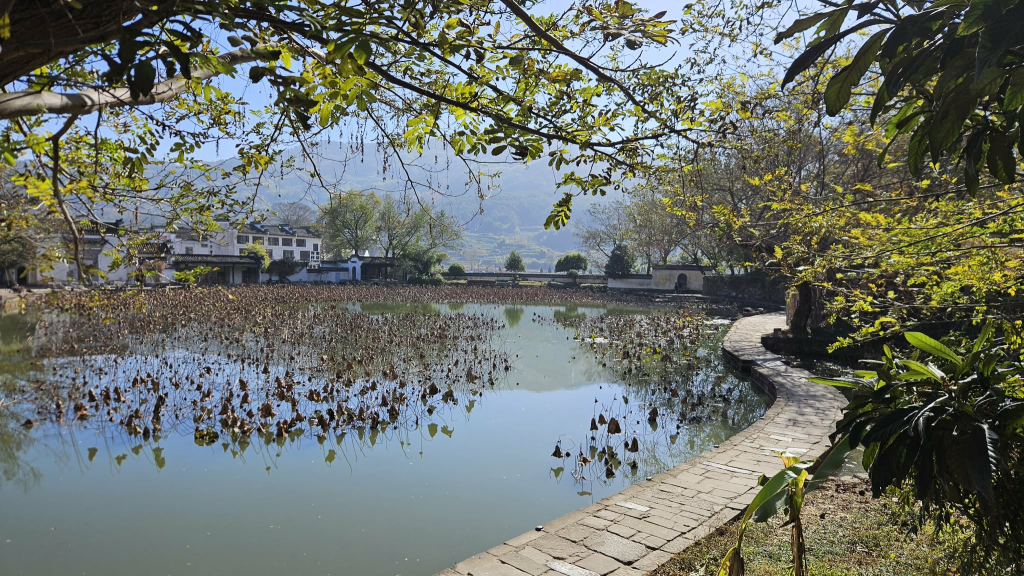
The prime scenic spot for most, however, is definitely Yongxing Lake. Now, the lake is certainly beautiful, lined with gingkoes and surrounded by Huizhou-style whitewashed houses with black roof tiles. The winding stone paths through the lake and the white geese added to its serenity. Perhaps it may have looked even better in summer, when the lotuses were all in bloom. The only criticism I have is that it is not as large as I expected. Looking at photos of Hongcun and Xidi online, I think their lakes and ponds surpass Yongxing Lake in size and majesty.
The village proper, where the residents live, is situated beside the lake. Unfortunately, this area was not as enjoyable to me as other sections of the village. The alleyways were narrow and could get quite cramped when a few tourists were trying to get through at one time. But the worst part was the amount of hassling we received from some village residents who wanted to offer tour services. I much preferred to just wander around at my own pace, in peace.
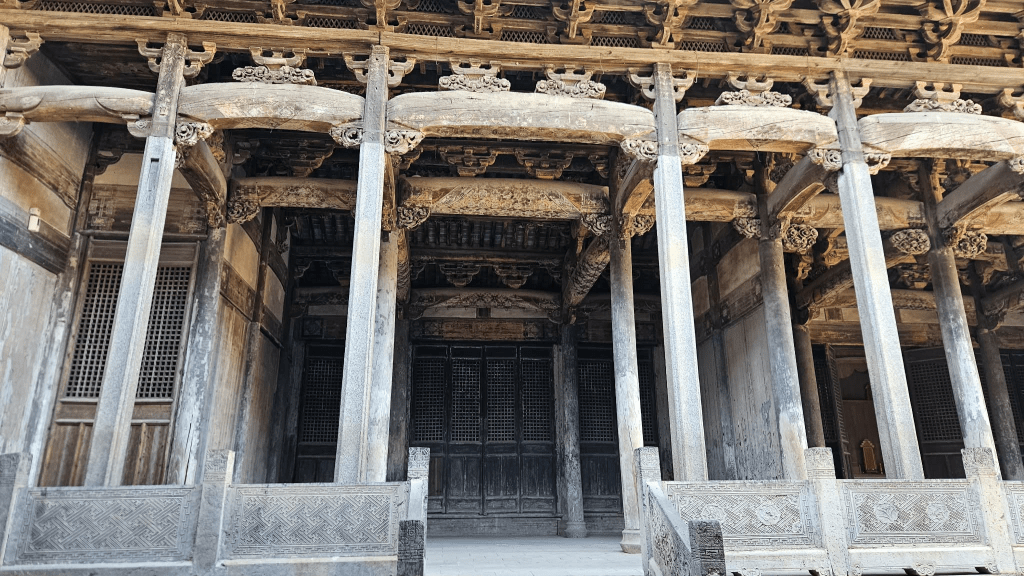
When one finally arrives at the north gate of the village, there is a magnificent wooden structure called the Baolun Hall. This was probably the one place where a guide would have been helpful, as it is obviously impossible to discern the symbolism of the carvings and design without explanation. After a quick tour of the Hall, we retraced our steps and exited from the south gate so that we could view the lake and the fields again, which were definitely the highlights of this village.
Qiankou Residence
There is little English information about the Qiankou Residence online. It is essentially an open-air museum where twenty or so traditional Huizhou houses have been relocated to prevent their destruction during efforts of modernisation, and also to showcase Huizhou architecture to future generations. It is divided into two main sections, a Qing dynasty section, and a Ming dynasty section.
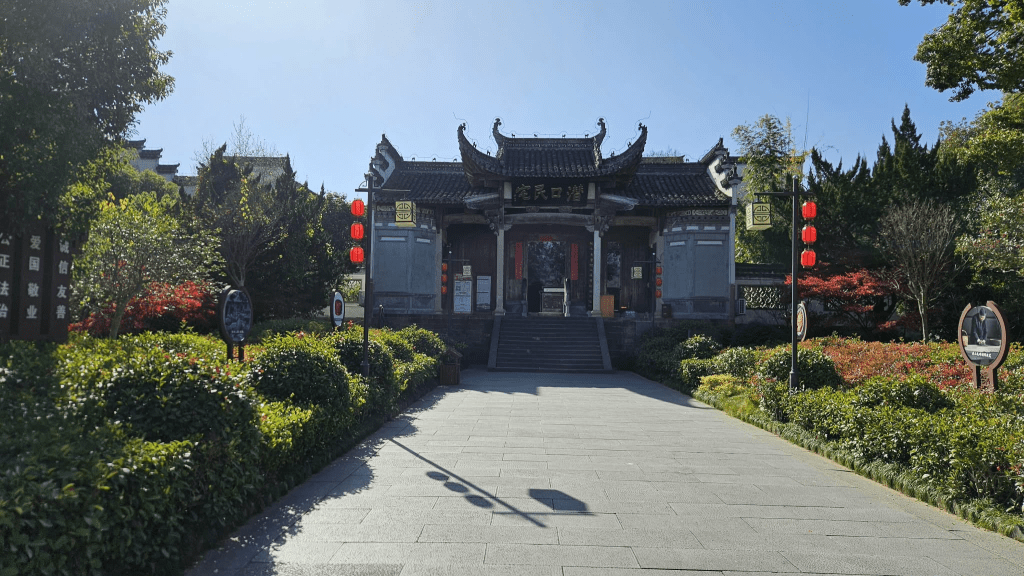
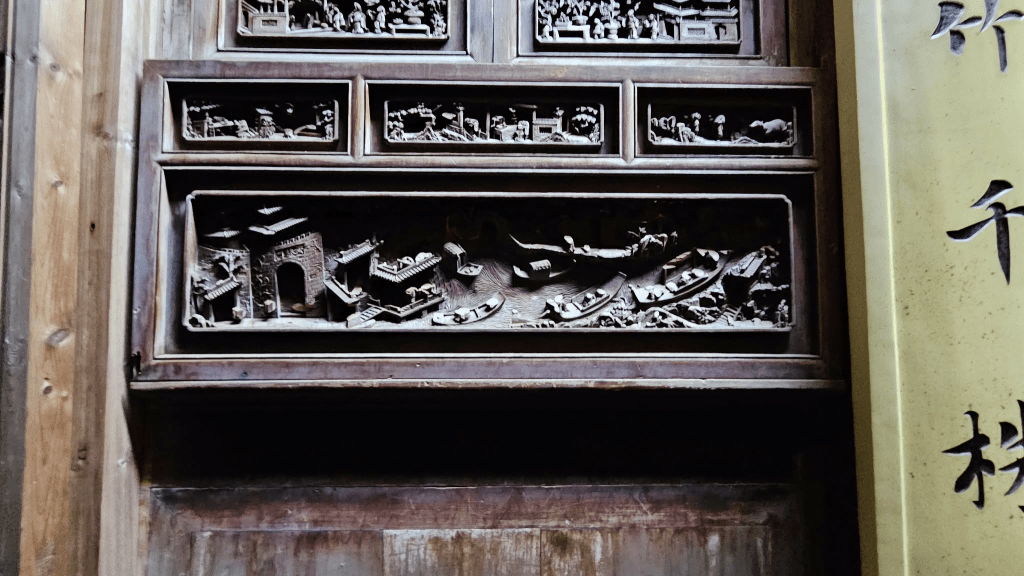
The houses were beautiful but very dark inside. There were intricate wood carvings on the panels and window-frames. The Ming section probably was nicer than the Qing section. Overall, it is difficult for the foreigner to learn much because there are not many English descriptions in the museum.
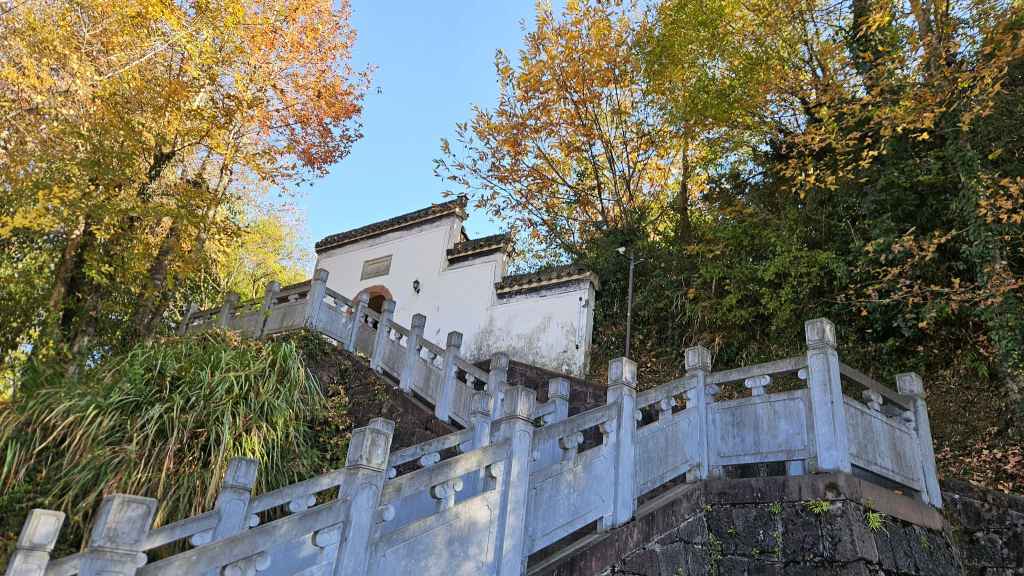
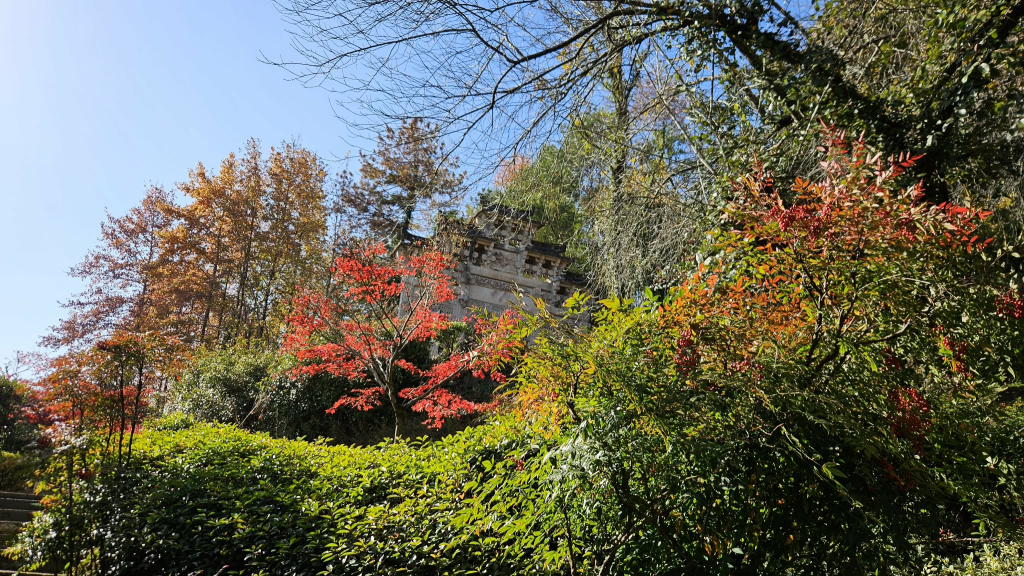
The most lovely aspect of the Qiankou Residence, however, is its tranquillity. In the early afternoon, there were hardly any visitors and the whole place was peaceful and quiet. The autumn foliage was also exceptional, with red maples and golden gingkoes adorning the walkways.
All of a sudden, the tranquillity was invaded by a tornado of schoolchildren on an excursion. I do not know why they were on excursion on a weekend, but they were very loud and turned the place into chaos. At the same moment, multiple buses of tourists arrived. It was a sign that we had to move to somewhere else, fast.
Xixinan Village
For visitors to China, Xixinan Village is not well-known at all. When we were travelling to Huangshan Mountain a few days prior, the taxi-driver commented that Xixinan Village was the least interesting of all the ancient villages in Huizhou. Perhaps that may be true to the majority of travellers, but Xixinan Village turned out unexpectedly to be my favourite destination in my Huizhou tour.

Although Xixinan Village was crowded, likely because it was free, the beauty of its scenery made it highly worthwhile to visit. At the northern entrance, there is a long flat bridge that crosses a lovely river sparkling in the sunlight, flanked with tall, ancient trees. Mountains are seen in the distance. The scene resembles an oil painting by an Impressionist master, as the faraway leaves glisten yellow under the evening sun.
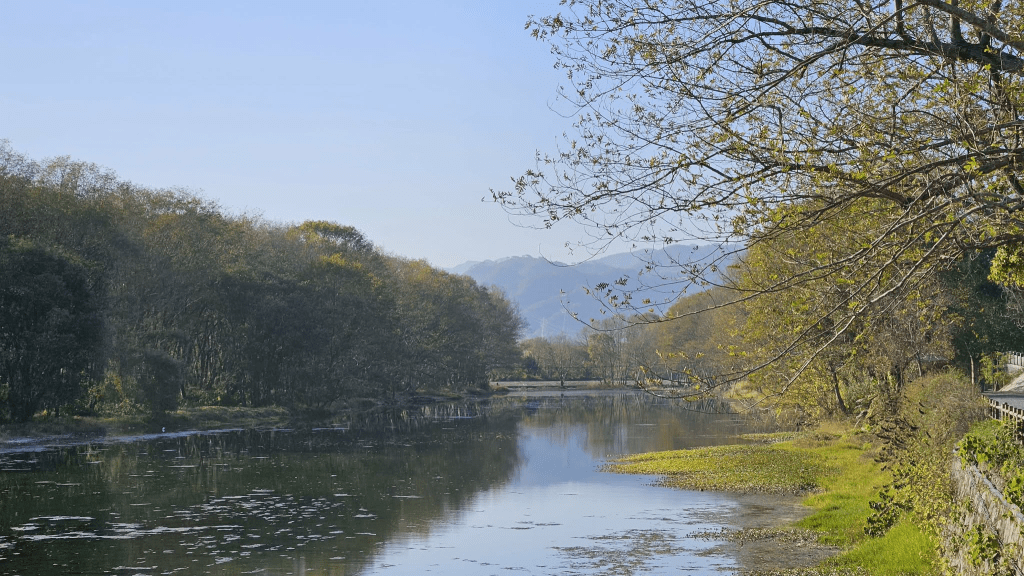
After crossing the river, the scenery only becomes more magical. The forest becomes thicker and several clear, slowly flowing brooks with moss-covered banks come into view. The trees reflect themselves in a swirl of yellow, brown, and green, with fragments of sky-blue peeping in between. When I visited, there was a raft that floated gently on the brook, offering an opportunity to experience tea in a floating teahouse.
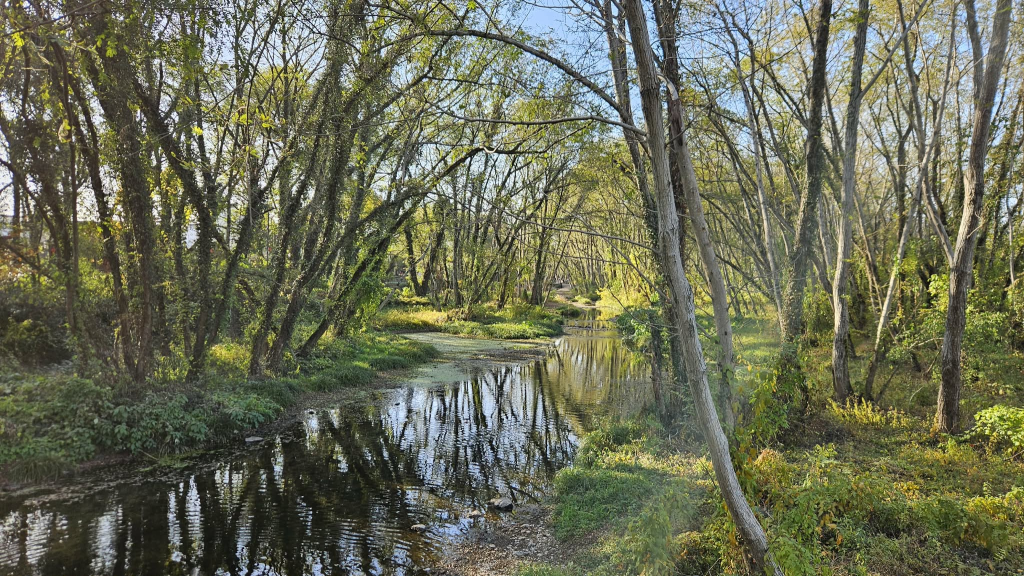
In some articles by the Chinese and social media posts, this forest has often been likened to some fantastical scene from the Wizard of Oz. This is peculiar; from my memory, the forest in the Wizard of Oz is haunted and filled with vengeful trees. The forest of Xixinan is nothing like this – there is no hint of danger.
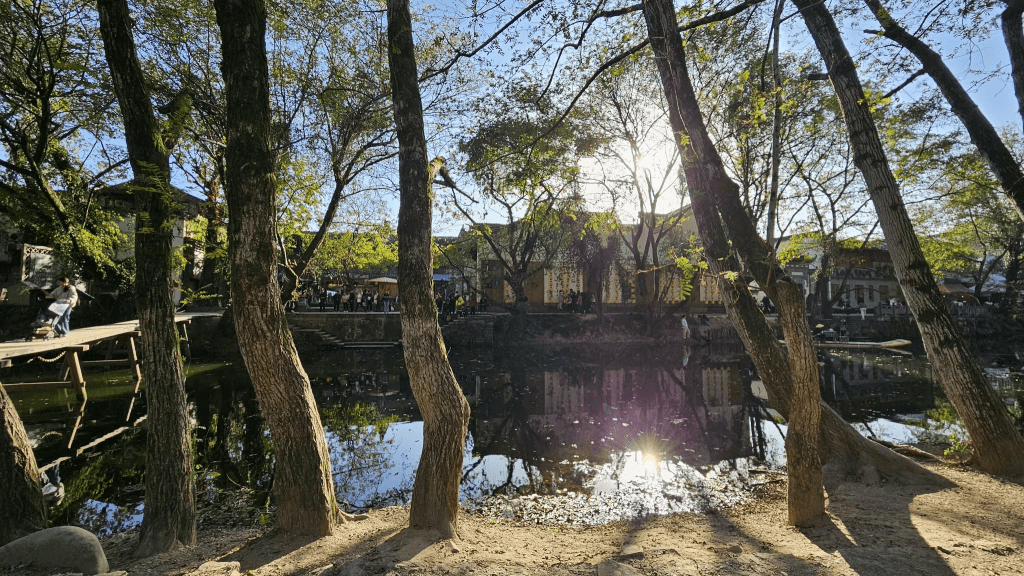
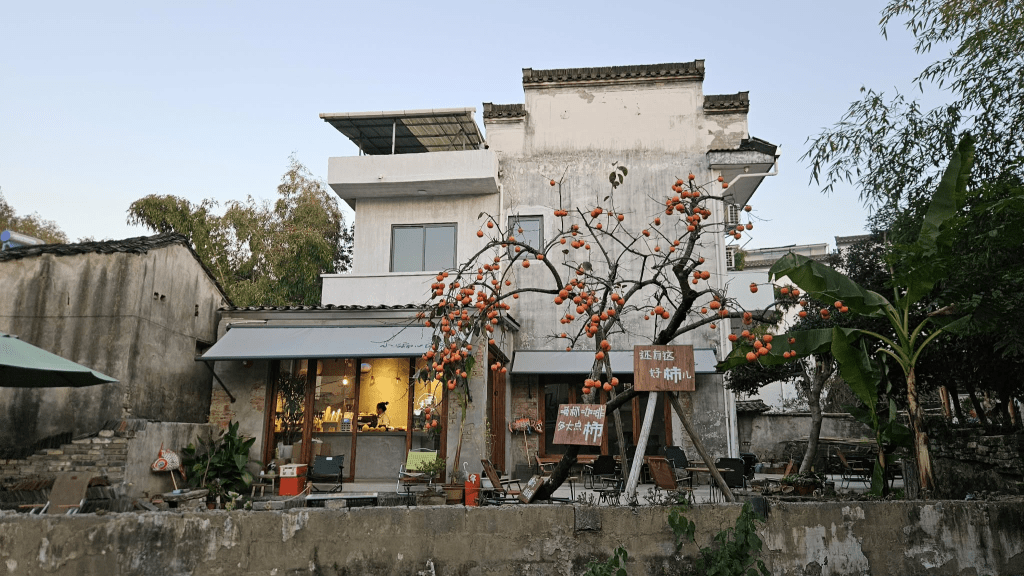
The trails leading deeper into the forest and the wetlands were attractive. Sadly, because we were running out of time, we went into the village instead to look for dinner. A striking difference between Chengkan and Xixinan Villages was that the shop-owners appeared to be much younger. The younger generation also tended more to leave visitors alone and not hassle them into buying products. This made the experience so much better. We found a restaurant with surprisingly delicious food and thus ended our day in Huizhou.
 Isaac Tang - Poet, Author, Composer
Leave a comment