By Isaac Tang
If people were to imagine a bamboo grove, the most famous grove to spring to mind would be the bamboo forest of Arashiyama in Kyoto, Japan. However, the Yunqi bamboo grove in Hangzhou, in my opinion, excels that of Arashiyama in all aspects. The Yunqi bamboo forest is indeed a living dream of the classical scholar and is the beautiful embodiment of literati ideals and philosophy. Even the name is imbued with poetry; the character “yun” means clouds and the character “qi” denotes “to perch (like a bird), to stay, to dwell.” I do not suppose that there is an English translation that would do the name justice, but perhaps the best effort would be “Bamboo Forest of the Lingering Clouds.”

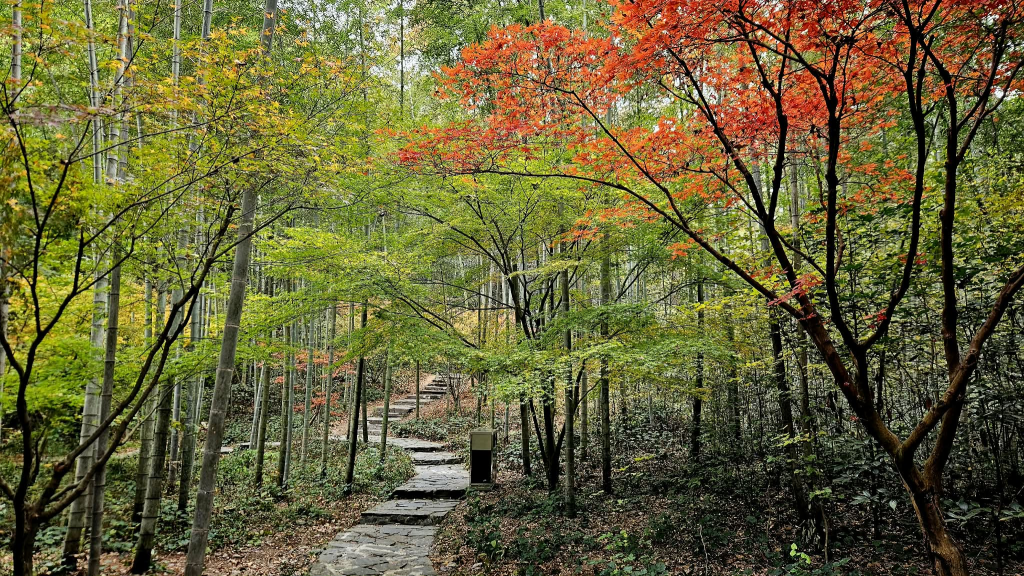
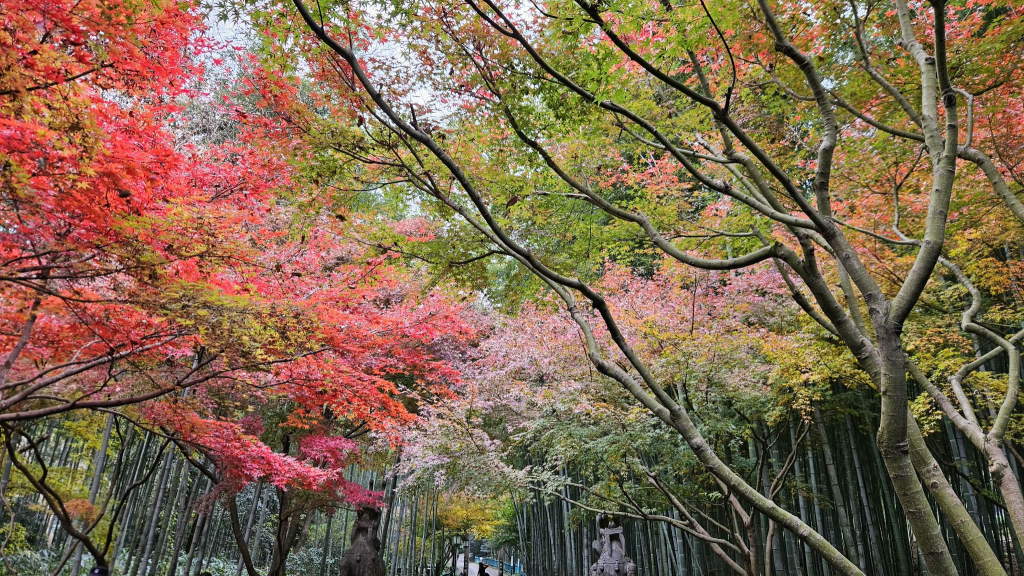
When dropped off at the entrance, which is a rectangular pavilion, the visitor is presented immediately with a view of tranquil grandeur. A stone path proceeds ahead, flanked by dense masses of tall, straight bamboo swaying in the gentle breeze. Two stone sculptures of a mythical creature, presumably the qilin, stand guard. In late autumn (early December), the maple leaves inject splashes of deep crimson to the scene. One can imagine what the Kangxi Emperor would have felt on his Great Southern Inspection, stepping into this grove during his visit to Hangzhou. Green, verdant and lush, it would have been a far cry from the vast and dry grasslands of his forebears. Left open-eyed and filled with wonder, this Manchu ruler probably felt his warring instincts calmed and pacified by the softness of nature.
After a short walk, one arrives at a lovely part of the forest. A pavilion with curved eaves stands quietly before a rectangular pool filled with crystal-clear water in which both the pebbles and the multi-coloured reflections of leaves, stone and sky can be viewed with equal clarity. The pavilion is aptly named “Pavilion for the Cleansing of the Heart” for indeed, the weary soul is tempted to wrench his sorrowful heart out of the breast and, in the water, to wash away every stain of anxiety, unrighteousness and burdensome thoughts.


There is another pavilion, smaller in size but not in beauty, housing a stele on which the name of the bamboo grove is inscribed. I suppose it could be a copy of the Emperor’s calligraphy, as many of the inscriptions have been broken and vandalised in the chaotic period of the Cultural Revolution. This pavilion, standing proudly against the green backdrop of bamboo, is further veiled by the golden leaves of a neighbouring tree, creating a striking piece of autumnal imagery that incorporates all the oriental features that a person could dream of.

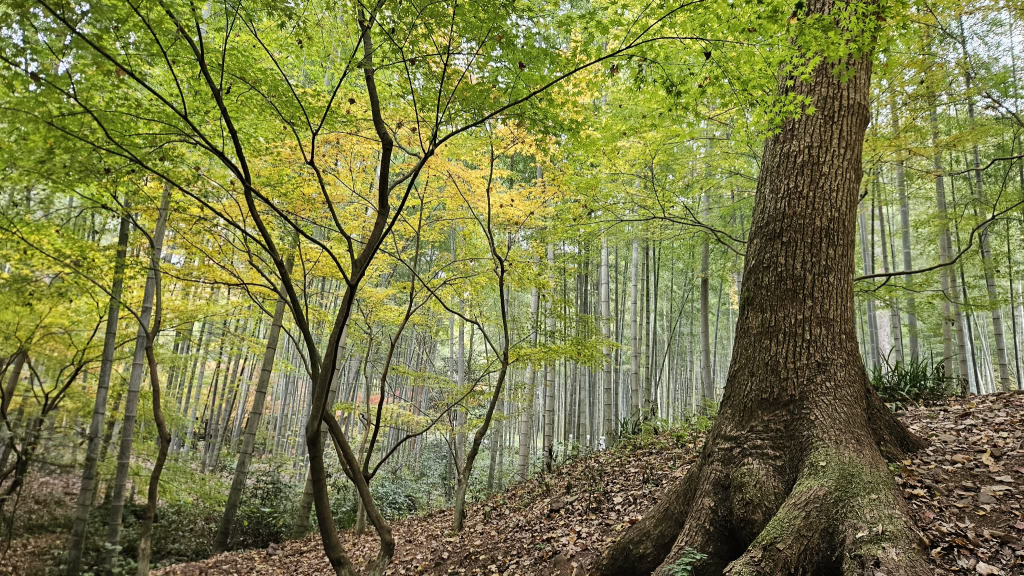
Lured deeper into the forest, there are many large, ancient trees, their leaves murmuring and whispering softly alongside the constant birdsong. The forest is large enough for two hours of wandering and slow exploration.
One will eventually reach the stone steps that lead up Wuyun mountain and onto the Shililangdang, a “ten-mile” trail along the mountain ridge that connects multiple scenic tea villages and tea plantations. Unfortunately, one must be prepared for the steepness of the trail and set aside many hours for this trek. It is therefore recommended that the shililangdang trail be attempted from the opposite direction; that is, to hike downhill from Longjing Village to the Yunqi Bamboo Grove. Another advantage is that those hiking in this direction can allegedly enter the Bamboo Grove without paying the entrance fee. This is probably true as no ticket booths or ticket inspection sites are present here. The entrance fee, however, is not expensive and only costs 8 yuan.

Overall, the Yunqi Bamboo Grove offers an atmosphere of classical serenity that will purify both the heart and the mind. It should be on the itinerary of all those who wish to experience the elegance and tranquillity which Hangzhou has been renowned for in ages past and present.
 Isaac Tang - Poet, Author, Composer
Leave a comment