
By Isaac Tang
Is it a surprise that Xiamen, the home of brave seafarers and voyagers who discovered and made new lives across the South Chinese Sea, should itself be constantly reinvented and reinvigorated? Travellers, when thinking of Xiamen, often think of Gulangyu, or the Isle of Drumming Waves, where its colonial past is exhibited in whitewashed mansions, seaside gardens, and cobblestone streets. But there is so much more to see in Xiamen, including newer attractions that illustrates the city’s remarkable ability to adapt with the times. Having recently visited Xiamen (November 2025), I shall discuss my favourite destination there, which is the Mountains-to-Sea Trail.
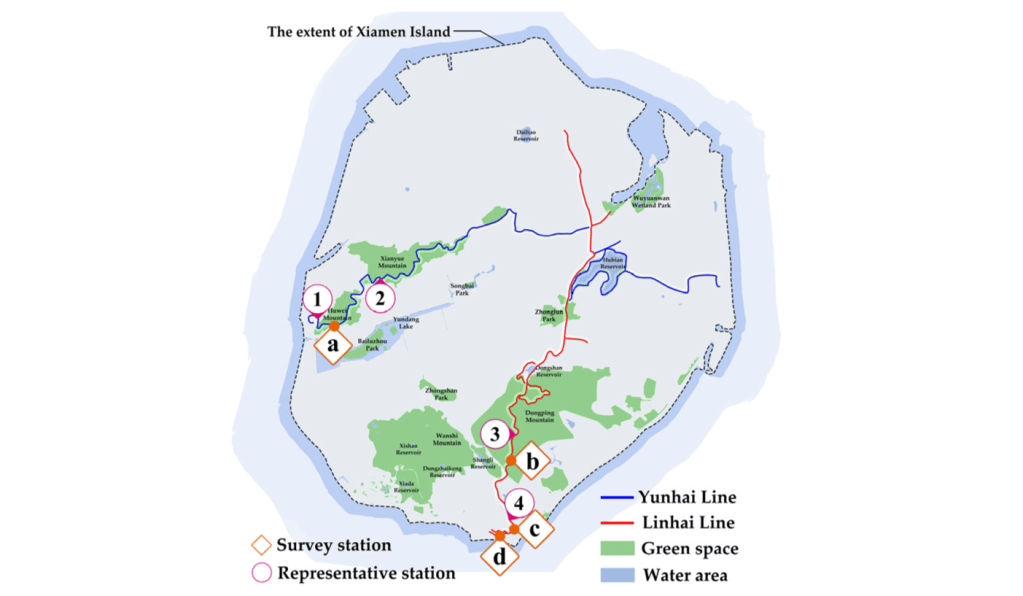
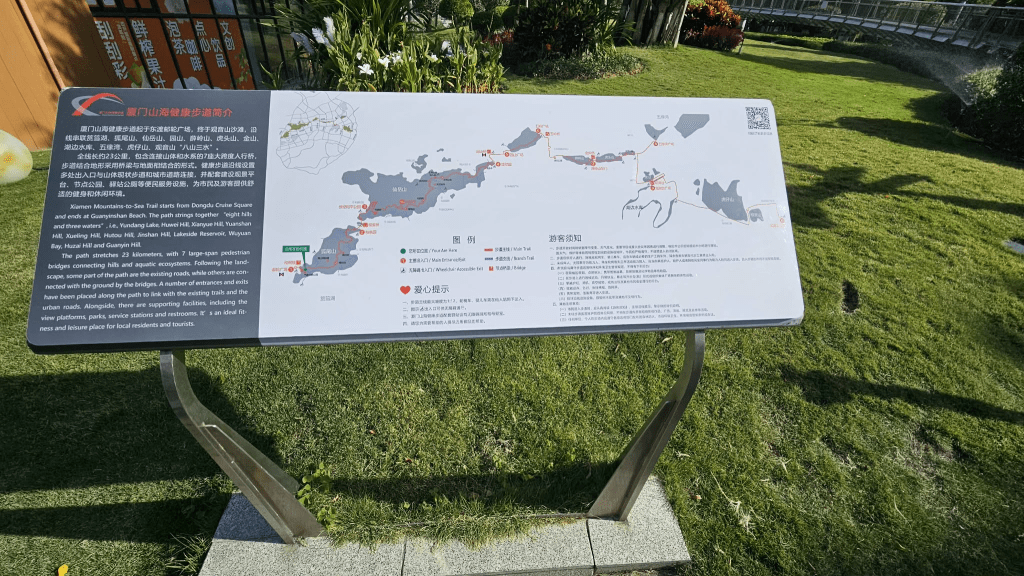
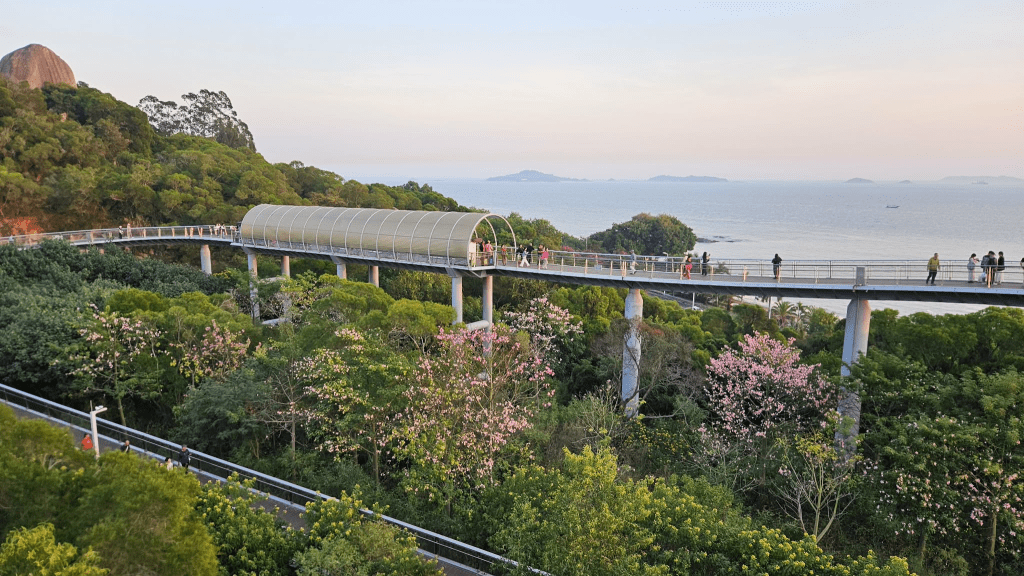
The Mountains-to-Sea Trail is an extremely long, mostly above-ground walkway that traverses Xiamen Island ambitiously, linking multiple parks and mountains together as it seamlessly makes its way to the sparkling sea. There are two main sections of this trial, the Yunhai (Cloud-Sea) trail and the Linhai (Forest-Sea) line. The Cloud-Sea Trail stretches from the Dongdu cruise terminal in the west to Guanyin Hill in the east, measuring 23 km in total. The Forest-Sea Trail in contrast stretches from Wuyuanwan Wetland Park in the north to the Heavenly Stream (Tianquan) Square in the south. The latter is slightly newer than the Cloud-Sea Trail and I am not certain about its length. However, the Forest-Sea trail goes along the deeply wooded and leafy Dongping Mountain and its dramatic opening into the southern sea makes this trail undoubtedly the fairer one of the two. Both, despite the length and the obvious amount of work needed to construct this marvel, are free to visit.
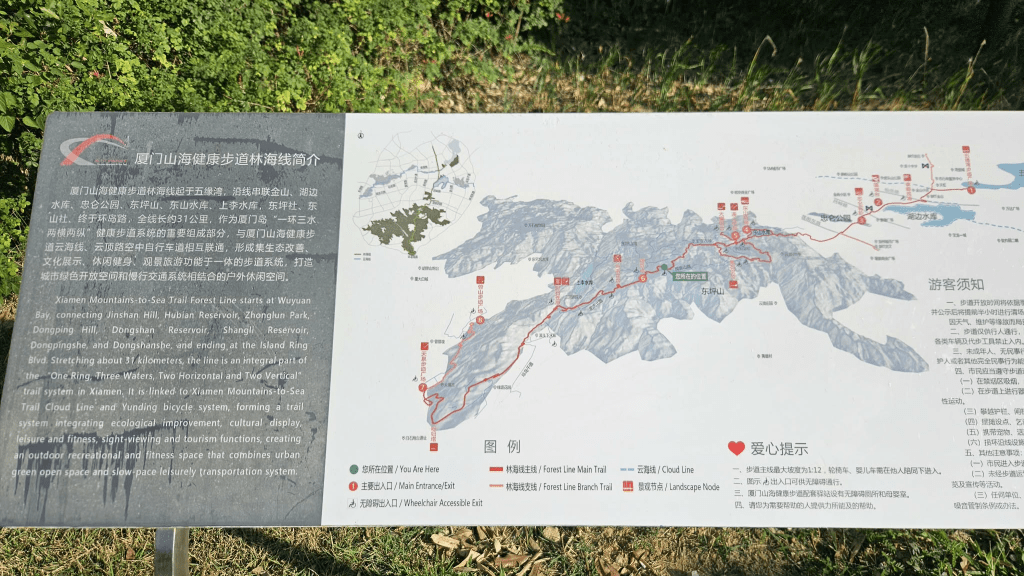
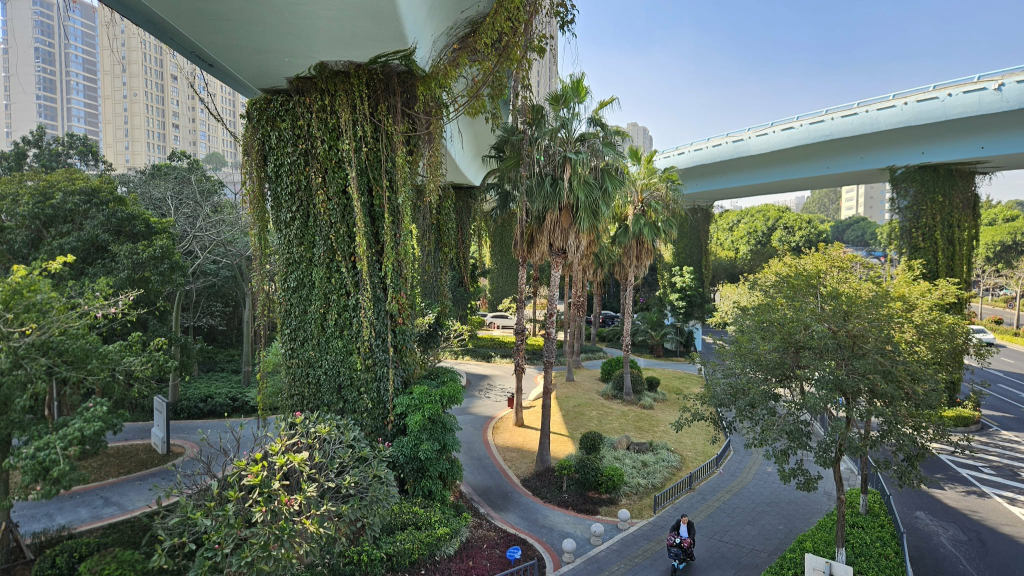
There are numerous entry and exit points on this trail. Every entry and exit location can be found on the trail’s mini-program in the WeChat app. Some are close to train stations; others are harder to get to. I entered the Forest-Sea trail via the entry point at Caitang Station. At this site, the trail is following the BRT line that hangs directly overhead, providing the walkway with fair amounts of shade from the afternoon sun. Half of the trail is dedicated for cyclists but the cyclist and pedestrian lanes are conveniently marked and separated by barriers. The concrete pillars and the underside of the BRT line are covered in luxuriant leaves, roots, and occasionally flowers. This is not a popular part of the trail so there were hardly any other people here. The path crosses over traffic intersections and passes by a large school with proverbs written on its whitewashed walls as it heads towards the viridian Dongping mountain ahead.
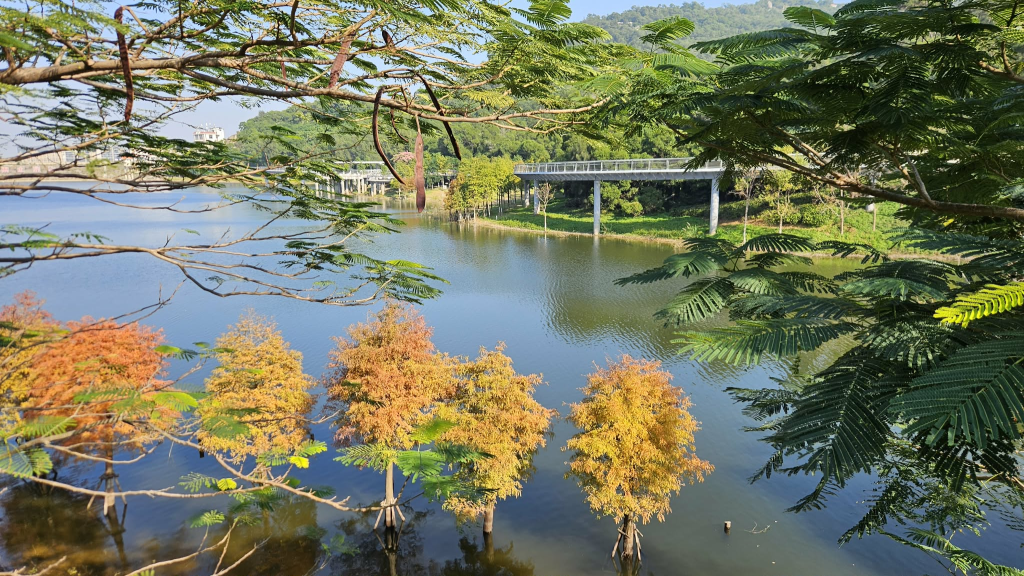
At the foot of Dongping mountain, the trail winds around the Dongshan (East Mountain) Reservoir, adorned with some pretty trees that change their colour during autumn. There is a circular viewing platform to appreciate this reservoir further. The walk following this becomes quite long and it splits into two paths. One path (left) is longer but allegedly more scenic, passing by a strangely shaped rock called Turtle Rock. The other path (right) is straighter and shorter. In this trip, I took the shorter route to conserve more energy for the remaining trek. There are some quaint and elegantly built camp grounds; one even had a pavilion perched on a high rock. Dark butterflies with splashes of colour are numerous and flutter along the way.

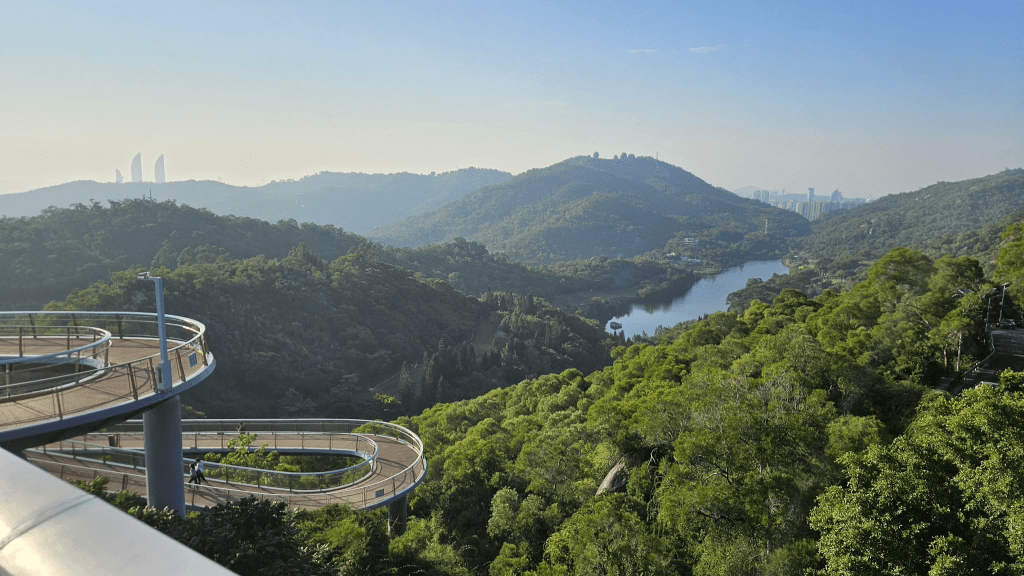
The path goes deeper into Dongping mountain and becomes uphill for a significant portion. Thus, the sudden appearance of the blue sea in the far distance is a delicious reward. Passing Butterfly Valley and Plum Blossom Platform, the Shangli Reservoir is reached, which is one of the most scenic points of the trail. It is a lagoon of deep blue water nestled amongst emerald valleys and tall, dark pine trees. In the horizon, all the famous landmarks of modern Xiamen can be viewed—the Shimao towers rising like two sails, the Kempinski hotel and the Sea Pearl Sightseeing Tower. The trail here starts to zigzag heavily to provide multiple views of this scenic spot from various angles, as well as the sea where ships are seen cruising along the gentle waves.
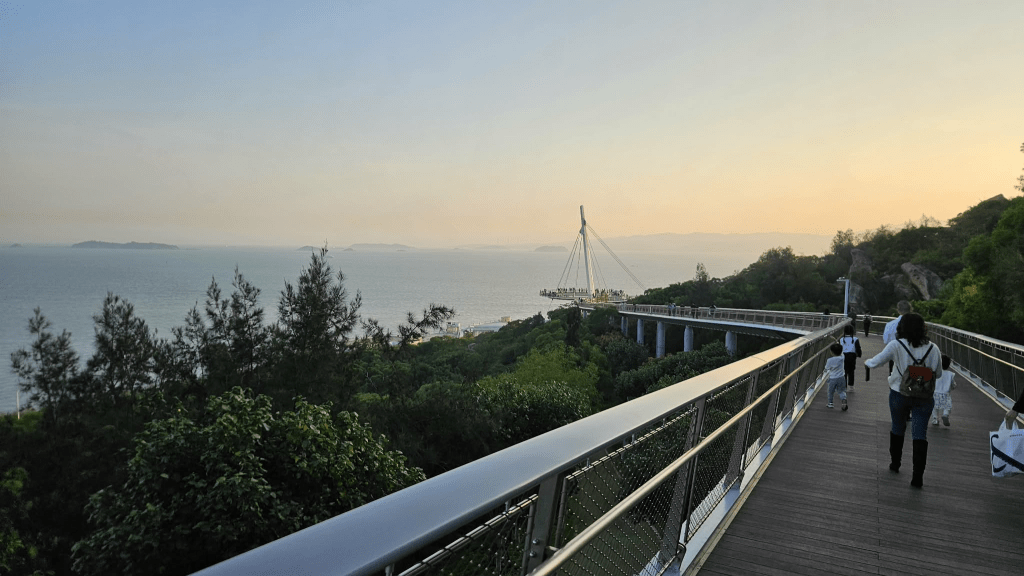
If you time your visit correctly, you can arrive at the last stretch of the trail in time for sunset and the orange light of the sun will spill over the sea as you approach Pangui Tower. For obvious reasons, the last section of the Forest-Sea Trail is very popular and moderately crowded with people hoping to snap photos of the setting sun. There were some people pretending to capture the sun with their hands while one young lady filmed her cat prancing on the handrail with the setting sun as its backdrop.
It took me about five hours to walk a total of 12km along the Forest-Sea Trail from Caitang station to the Tianquan square which marks the end of the trail. It appears, however, that the trail will likely be expanded as there are current works to extend the trail until it reaches Zengcuo’an. While the trail is not an easy walk, it is certainly an enjoyable and rewarding one, showing the many corners of Xiamen, both its modern marvels and its natural beauties.
 Isaac Tang - Poet, Author, Composer
Leave a comment