By Isaac Tang
This article is different from my previous articles where I discourse on poetry and music. As part of the Chinese diaspora, I have had a lifelong dream of visiting the Middle Kingdom. This was delayed multiple times for various reasons, including a certain event in the year 2020. Now that China has opened up its doors again and waived visa requirements for Australians and many other nationalities, I have finally been able to visit China for the first time (October 2024) and see first-hand the historical sites that I have been reading about and imagining for years.
I know very well how daunting and nerve-racking it can be for a foreigner to plan a visit to China on their own. Sometimes, it seems that there are insurmountable challenges, including websites written completely in Chinese, outdated English material (websites and books), fast-selling tickets to popular attractions and the use of Chinese apps that often do not accept foreign phone numbers. Even with my elementary knowledge of Mandarin, I found it a steep learning curve.
Of all the attractions in China, for many people (including me), the one unmissable attraction is the majestic Forbidden City, also known as the Palace Museum, situated at the heart of Beijing. Measuring 720,000 square metres, the Forbidden City is the largest preserved palace complex in the world and was the home to the emperors of the Ming and Qing dynasties. Visitor numbers are capped at 80,000 (some sources say it is now 40,000) and, given the historic significance of this site and how huge domestic tourism is within China, it is no surprise that tickets are sold out every single day. However, the good news is that the Palace Museum is probably the most foreigner-friendly attraction in China.
CONTENTS
- How to book a ticket
- How to get to the Forbidden City
- How to plan your journey within the Forbidden City
- Jingshan Park (Prospect Hill)
- Summary
HOW TO BOOK A TICKET
There are two main ways to book a ticket to the Palace Museum. The first, and the recommended, way is through the official website https://intl.dpm.org.cn/index.html. This website, unlike websites for other tourist spots in China, is in 6 different languages, including English, French, Japanese and Spanish. Its English interface is also overall quite easy to use. However, the tickets will only be available for purchase at 8pm (Beijing time) 7 days prior to your day of visit. And the tickets sell out very fast, which can be within minutes for special occasions (e.g. Oct 1 – China’s National Day). But as long as you do not plan your Beijing trip during China’s public holidays, the tickets usually take about 12-24 hours to sell out (this is from my own sporadic observations). You will need to create an account on the website and under ‘Personal Center,’ you can add the names and the passport numbers of the people you will be buying tickets for. This will make it much easier and faster when the time comes for you to secure your tickets. Please note that there are no physical or electronic tickets; your passport will serve as your ticket. At the entrance, staff members will type your passport number into the system to verify that you have a ‘ticket’.
Because I was anxious that I may not be able to secure a ticket in a timely manner, I did explore other options to obtain a ticket. The second way is via third parties (e.g. viator, Trip.com). However, the prices are often inflated or combined with a tour guide/group. Also, it appears that third parties do not get early bird tickets; they must wait, like everyone else, for 8pm 7 days prior to the day. Some do not guarantee entry to the Treasure Gallery; none (that I saw) guarantee entry to the Clock Gallery.
Ultimately, I set an alarm for the time that the tickets will come out and bought my tickets within the first minute. I also bought tickets for the Treasure Gallery and the Clock Gallery, which are two amazing galleries and well worth the purchase (more on this later). On the day of my Forbidden City visit, I was glad I did not yield to the pressure to buy a tour because it was clear that all the tour groups go to the same places within the Forbidden City i.e. the most crowded places.
HOW TO GET TO THE FORBIDDEN CITY
The Forbidden City only has 1 entrance, which is the south gate. The south gate of the Forbidden City is the Meridian Gate “wumen” (午门), not the Gate of Heavenly Peace “tian’anmen” (天安门). Many tourist websites and books recommend entry via the Gate of Heavenly Peace which, on first glance, may sound wonderful. Indeed, the Gate of Heavenly Peace is an imposing structure sitting at the midpoint of Chang’an Avenue and it was where Mao Zedong proclaimed the beginning of the People’s Republic of China. Walking north through the Gate of Heavenly Peace, you will pass the Imperial Ancestral Temple on your right and the Zhongshan Park on your left. It would be a walk full of history… but also full of crowds and tourists.
I am grateful that I decided not to reach the Forbidden City via the Gate of Heavenly Peace. On another day of my trip, I made an unplanned stop at Tian’anmen Station and hoped to walk along Chang’an Avenue. The station was full of tourists and the crowd could not quickly clear because there were mandatory security checks to exit (Chinese subway stations usually perform security checks on entry rather than exit). There were very loud, blaring announcements completely in Mandarin and played in a never-ending loop. When we exited the station, there was a strong police presence and we were stopped multiple times for ID checks. There were many tourists and it was very loud and not easy to travel. There were also a lot of people smoking. Therefore, this was a low point of my visit to Beijing.
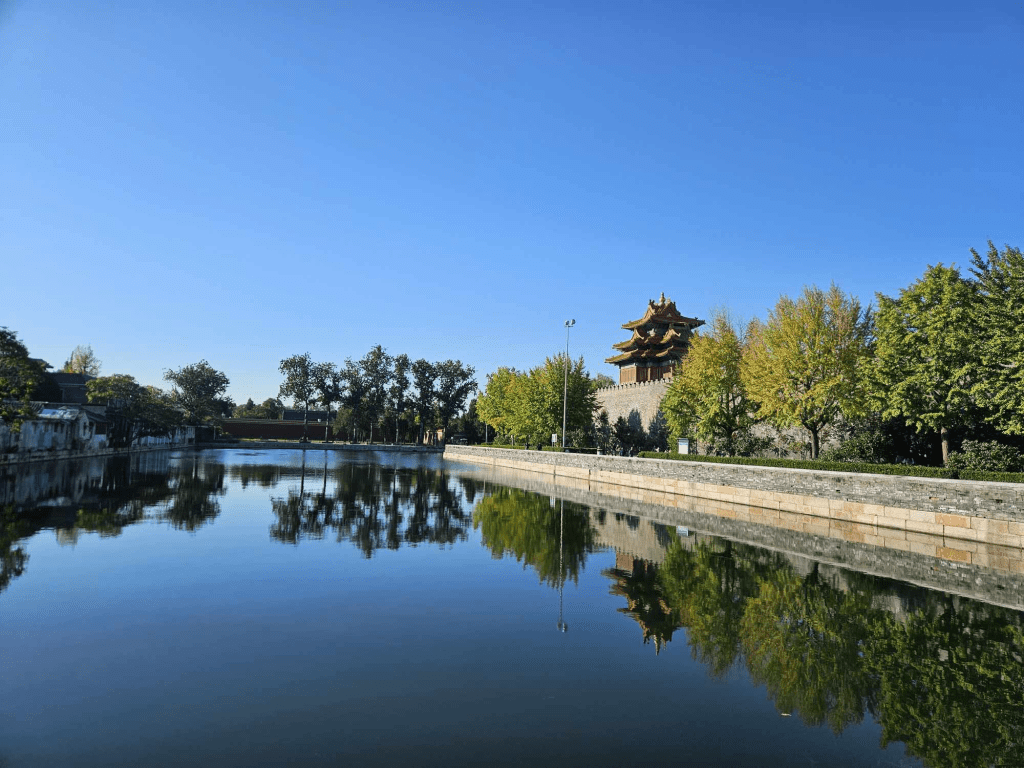
The way I took to reach the Forbidden City was from the east, walking along Donghuamen Avenue “donghuamen dajie” (东华门大街). There were several sources that suggested this would be a more scenic and peaceful route. And they were right. At the end of Donghuamen Avenue, you cross the beautiful moat of the Forbidden City before reaching the Gate of Eastern Splendour i.e. “donghuamen” (东华门). Although the Gate of Eastern Splendour is a valid exit from the Forbidden City, it is not an entrance. So you will have to walk along the tall, grey walls, making your way towards the Meridian Gate. If your hotel is not in the vicinity of Donghuamen Avenue, you could consider taking the subway to Jinyu Hutong Station and walking directly from there to Donghuamen Avenue.
HOW TO PLAN YOUR JOURNEY WITHIN THE FORBIDDEN CITY
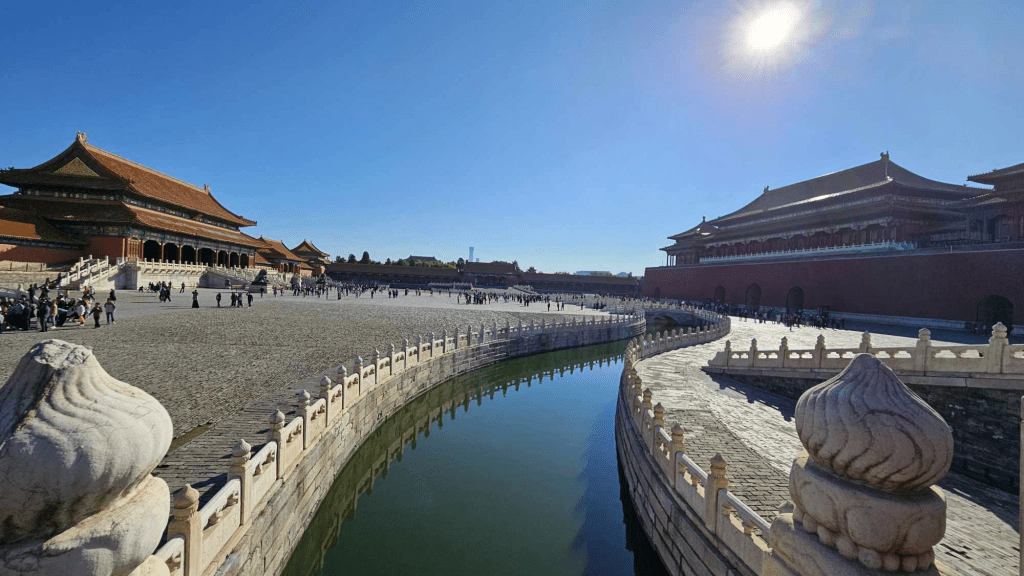
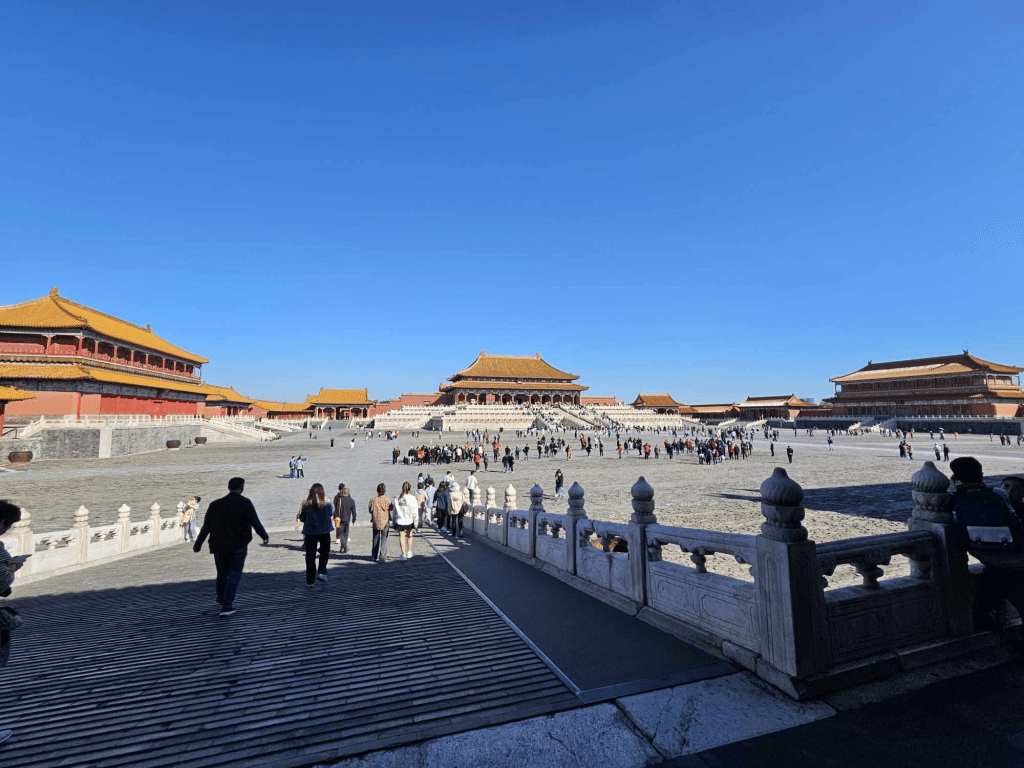
Now that you have reached the Meridian Gate and have had your passport examined and verified by the Palace staff, you pass through the Meridian Gate. You are immediately greeted by an extraordinary view of grandeur and opulence. What will also strike you is the sheer size of the palace complex. It is quickly evident that it is much larger than other similar palace complexes, for example, Gyeongbok Palace in Seoul, South Korea.
I do not think it is possible to see everything in the Forbidden City even if you spent the whole day. It is therefore important that you decide, in advance, what places in the Forbidden City will interest you. You should also set aside adequate time (at least 3-4 hours) to devote to this place. Furthermore, you should note the sites that are more likely to be crowded. Resources you can use include China tour books, the official Palace Museum website and pictures of the Palace Museum maps on the Internet. It is also nice, though certainly not mandatory, to watch movies beforehand that use the Forbidden City as a setting, for example The Last Emperor.
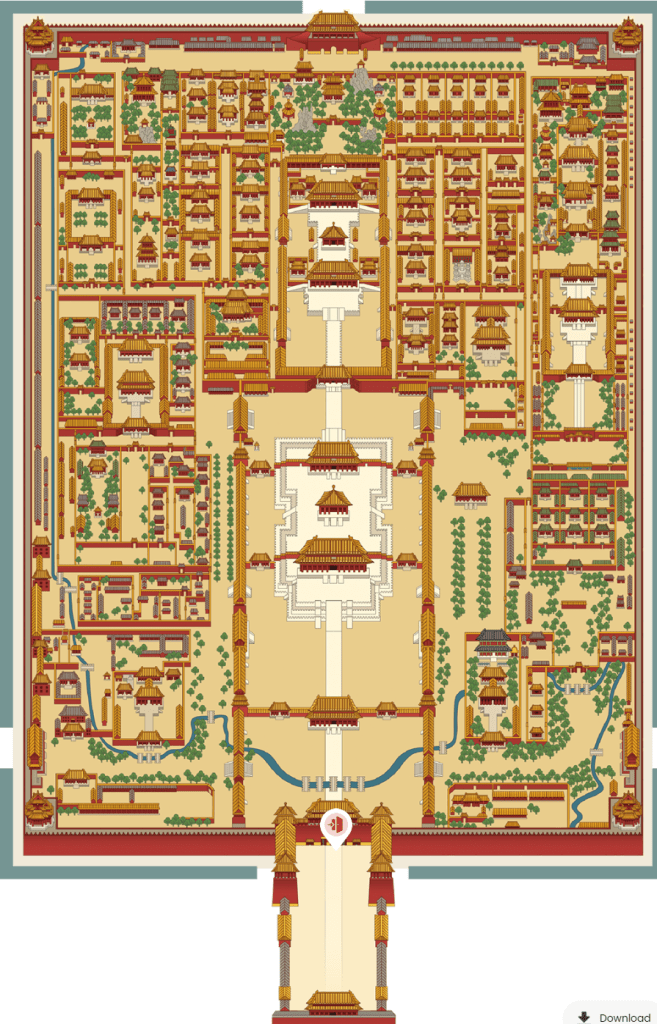
For me, the sites of interest I marked out were the Forbidden City walls (a portion of which you can climb), the Hall of Martial Valour (which houses the Ceramics Gallery), the Central Axis, the Treasure Gallery, the Clock Gallery, the ruins of the Palace of Prolonging Happiness and the Imperial Garden. These add up to, I believe, less than 30% of the entire complex.
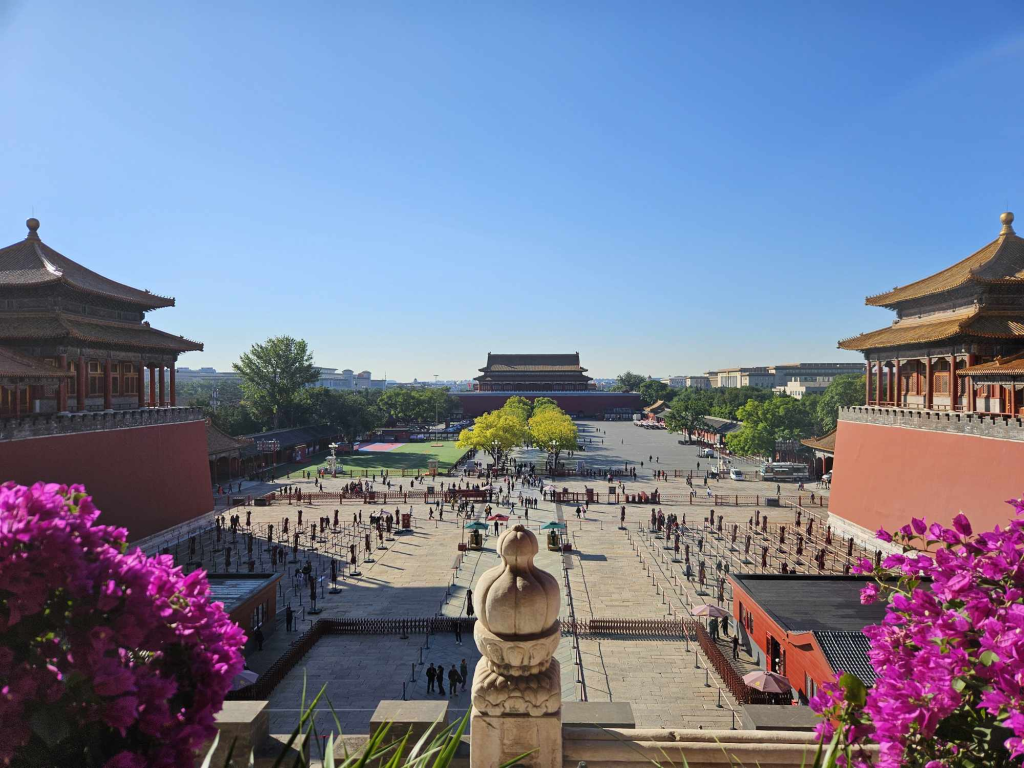
Before I continue, it is useful to know that the official website has a map that shows you where all the toilets are located. However, if you cannot remember the locations when you are there, do not worry because firstly, there are many toilets for tourists scattered throughout the Forbidden City and secondly, there are always clear signs pointing to them. I saw an English-speaking tourist asking a security guard at the Meridian Gate where the closest toilet was. Unfortunately, due to the language barrier, he had to resort to undignifying sign language to demonstrate his need to urinate. Hopefully, as long as you keep walking with an eye open for the numerous toilet signs, you will not need to recreate this awkward scene.
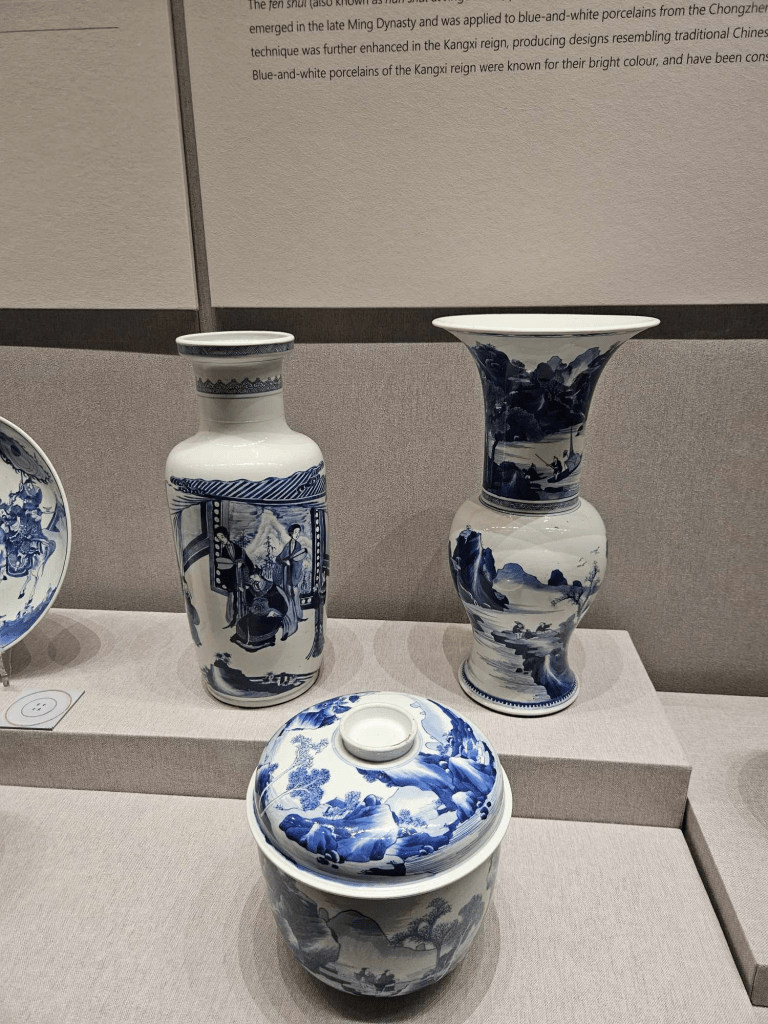
The Hall of Martial Valour is located in the south-west corner of the Forbidden City. This area was peaceful and quiet in the morning and had grassy lawns and green willows growing next to a winding stream with golden carp. The tranquillity had even lulled some Chinese visitors into having short naps on the benches under the warm sunlight. The Ceramics Gallery was large and comprehensive and showcased many beautiful examples of porcelain throughout Chinese history. All exhibits have English captions. On hindsight, I regret not also visiting the Hall of Literary Brilliance in the south-east corner of the Forbidden City and browsing the Gallery of Calligraphy and Painting there.
The Central Axis of the Forbidden City, unsurprisingly, contains the largest and most important structures, including the Hall of Supreme Harmony, the Hall of Middle Harmony and the Hall of Preserving Harmony. It unsurprisingly is also where most of the tourists will be congregated. Some websites recommend that the central axis is best visited at the end of the day (e.g. 3-4pm) because by this time, most of the tourists would have left. However, because I had planned to visit other sites in the afternoon, I was unable to verify this although it makes perfect sense.
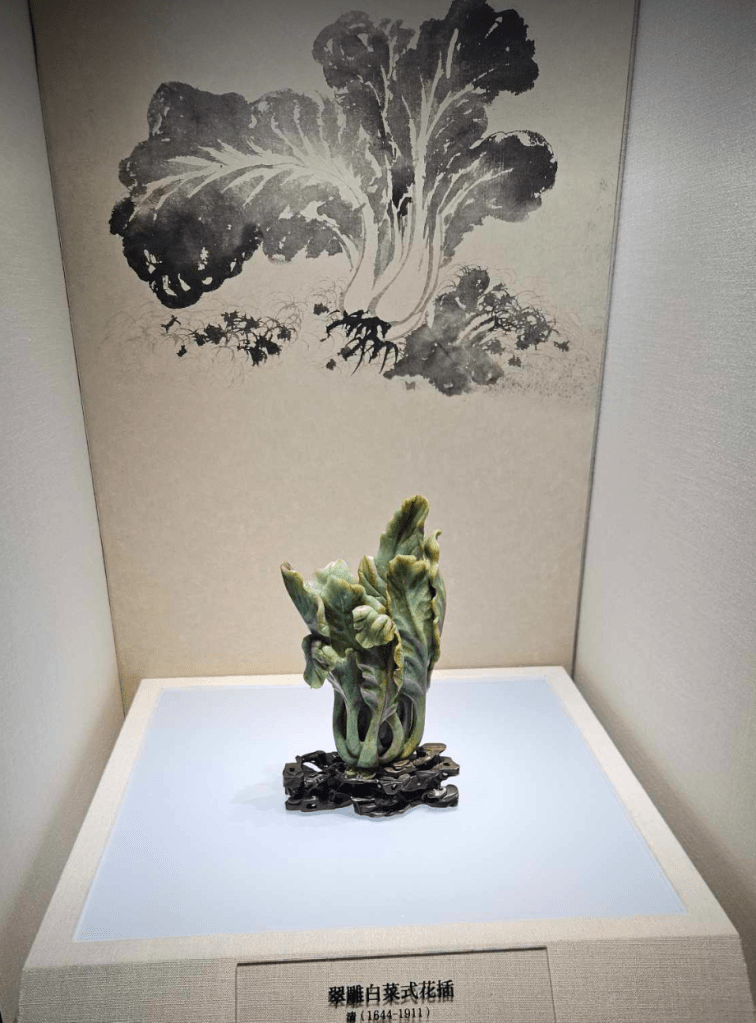
The Treasure Gallery is definitely a must-see in your visit to the Forbidden City. A ticket to the Treasure Gallery also allows you to see the famous nine-dragon screen located in front of the gallery. However, my favourite part of the Treasure Gallery was the extensive collection of jade-crafted items. For example, there were “potted plants” entirely made from jade and a jade bok-choy that looked both realistic and delicious. Near to the Treasure Gallery, the Clock Gallery showcases the royal court’s obsession with European mechanical clocks in the Qing dynasty.
When I left the Forbidden City via the North Gate, which is the Gate of Divine Prowess “shenwumen” (神武门), there were still numerous places I did not get to explore. Most notably, these included the Hall of Literary Brilliance and the Hall of Pleasant Sounds. I would also have liked to spend a few more hours just wandering around the labyrinth of smaller palaces. But even after the small portion that I did visit, my legs were truly aching, exhausted from the long walk.
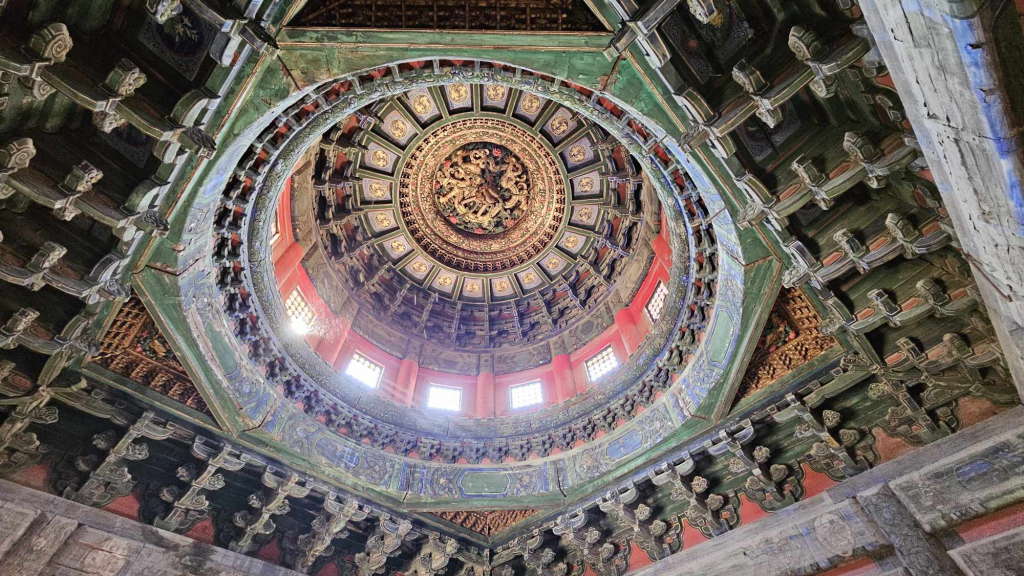
JINGSHAN PARK (PROSPECT HILL)
A visit to the Forbidden City is not complete without a visit to Jingshan Park, or Prospect Hill, directly across the road from the Gate of Divine Prowess. Prospect Hill is an artificial hill constructed from the soil that was dug up when the moat was being made. There are five pavilions on this hill. From the highest pavilion, the Pavilion of Everlasting Spring “wanchunting” (万春亭), you will get a panoramic view of the Forbidden City in all its glory.
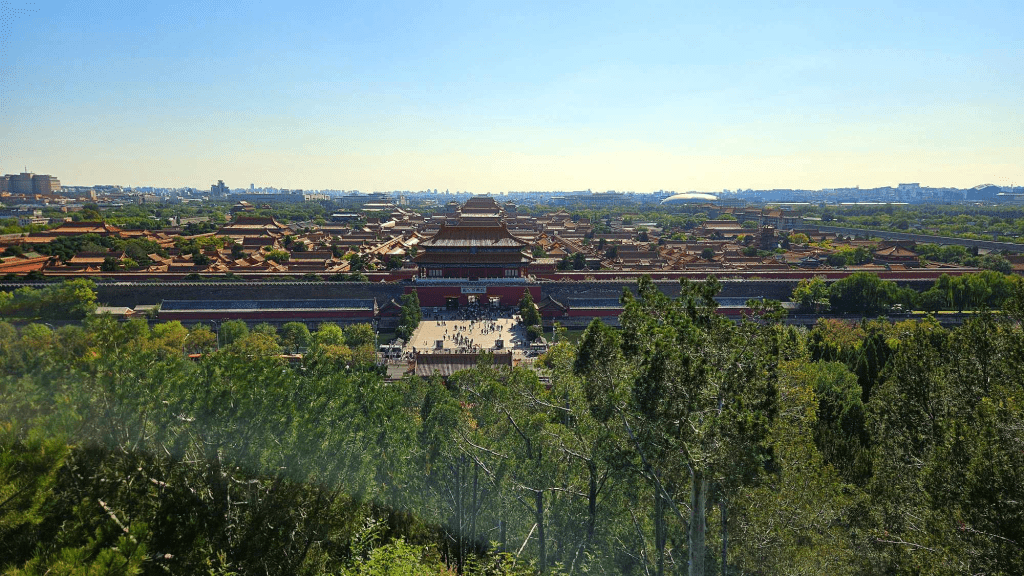
It is easy to get to Prospect Hill. All you need to do is go through the busy road’s underpass and enter the park through the south gate. There is no need to pre-book tickets to Prospect Hill and the tickets can be easily purchased on-site. The park is not as busy as the Forbidden City and there are numerous trees to shade you from the sun. Of these trees, some are magnificent persimmon trees which, in autumn, are absolutely laden with persimmons. On a darker note, you can also see the tree (or the re-planted tree) where the last Ming Emperor, the Chongzhen Emperor, hanged himself on hearing of the rebel invasion of Beijing.
SUMMARY
In summary, my top tips in visiting the Forbidden City are:
- Purchase tickets from the official website as soon as they become available
- Consider travelling to the Forbidden City via Donghuamen instead of the more popular Tian’anmen
- Plan the sites of interest to you before you get to the Forbidden City
- Visit the Treasure Gallery and the Clock Gallery
- Visit Prospect Hill (Jingshan Park) after you have finished touring the Forbidden City
 Isaac Tang - Poet, Author, Composer
Leave a comment